
The Green River Valley played an important role in Green River Utah pioneer history. Emigrants followed the river’s winding course through Utah Territory. Many were searching for gold, farmland, or a fresh start. But in the summer of 1862, that path became dangerous. Tensions between settlers and Native nations were rising, and violence was no longer far away. It was waiting just beyond the bend.
It was there, near the banks of the Green River, that James Gardner Bailey lost his life. A husband. A father of six. A man who left home with hope in his heart and never made it back.
Like Christian Fausel, whose Civil War story is also told on this site, James Bailey’s journey was shaped by hardship and hope.
James Gardner Bailey: A Life Cut Short on the Western Trail
James Gardner Bailey was born in the spring of 1827 in Centre County, Pennsylvania. He was the oldest son of William and Nancy (Gardner) Bailey. His great-grandfather, Richard Bailey, was an Irish immigrant from Ulster. Richard’s name would live on in the little community of Baileyville.
James grew up in a Presbyterian home, surrounded by farmland and family. There were plenty of brothers and sisters, and daily life was shaped by hard work, strong faith, and close ties. Those early years on the farm taught him discipline and gave him a steady kind of strength that would stay with him.
Starting a Family
By 1850, James was a merchant in Ferguson Township, not far from where he had been raised. He married Sarah Margaret Wallace, a young woman from nearby Clearfield County. Their first child, Anna, was born in 1851. Four more followed: Samuel, Charles, Nancy, and James Robert Bruce, the youngest born just months before everything changed.
Like many families at the time, the Baileys were drawn west. The promise of land and a fresh start led them to Kansas. By 1857, they had settled in Lecompton. The town was a hotbed of tension as the nation fought over slavery. James stayed focused on home and work, doing his best to raise a young family in a place caught in national conflict.
By 1860, the Baileys had moved to Oskaloosa in Jefferson County. James remained active in Lecompton. As a result, when the community faced a crisis in early 1861, he stepped into a leadership role.
Helping His Neighbors
The winter of 1861 came after a year of poor crops. Farmers in Lecompton and nearby Kentucky Township were desperate. There weren’t enough seeds to plant for spring.
On February 16, a large meeting was held at Rowena Hall. The committee chose James as one of five members to find a solution.
Their plan was simple. They would distribute seed grain such as wheat, corn, oats, and potatoes to local farmers. After the harvest, each farmer would return what they had borrowed. That returned grain would become the foundation of a school fund to support local children. The idea helped both struggling families and the future of the community.
James’s name appeared in the newspaper:
“James G. Bailey, Standing Committee Member, Lecompton-Kentucky Township”
Kansas National Democrat, February 21, 1861
He wasn’t just a merchant or a pioneer. He was a man who cared about his neighbors and took action when it counted.
Heading West Again
In the spring of 1862, James joined a wagon train heading toward the gold fields near the Salmon River, in what is now Idaho. His wife had just given birth. There were five other children at home. He wasn’t chasing riches. Instead, he was trying to give his family a better future.
The journey was long and dangerous. The wagon train passed through what was then Dakota Territory, a vast and unsettled land. Native nations such as the Shoshone and Bannock lived in the region. Many were growing frustrated as more settlers crossed their land.
In August, the wagon train was camped near the Green River, about 80 miles north of Salt Lake City. James and another man went fishing a short distance from camp. While they were away, a group of Native warriors tried to drive off the camp’s livestock. On their way out, they encountered James. He was killed instantly. One arrow struck his head. The other pierced his heart.
James was 35 years old.
Trouble Along the Green River
That same week, Mormon scouts under Captain Lot Smith had been sent to patrol the trails north of Salt Lake. Their orders were to protect travelers and look for signs of raids. Reports from their expedition appeared in the Deseret News on August 13, 1862.
They found chaos.
The soldiers discovered burned wagons and buried the bodies of three murdered men. They followed tracks and signs of raids along the very trail James had traveled. They believed a group of Native warriors had been moving through the area, ambushing travelers and stealing livestock.
James’s name was never mentioned in the report. However, the location, the timing, and the details match. He was likely one of the men killed during that same stretch of violence.
Whether his body was among those the scouts buried or not, he was part of a violent chapter in trail history. His death was not a random act. It was part of the broader struggle between settlers pushing west and Native communities trying to hold on to their lands and way of life.
Aftermath: A Widow Left Behind in Kansas
Back in Kansas, Sarah Bailey received word of her husband’s death. The telegrams and letters were likely short and grim. The newspapers said James had been killed by “savages.” But history shows a more complex truth.
He died in a place where survival was never certain. Where cultures clashed. Where the United States was expanding into land that others called home.
James Gardner Bailey left behind a young widow and six children. Although his journey had ended, the story did not. Sarah went on to raise their children and build a new life. And James’s name would live on, not just in newspaper archives or old records, but in the memories of those he left behind.
James Bailey’s life ended far from home. It likely happened just days or even hours before Mormon scouts passed through the same valley and buried the bodies of other travelers lost to the violence. His death was part of a larger story unfolding along the western trail. And while he never made it home, his legacy lived on in the strength of his widow, the lives of his children, and in the long memory of a land still being shaped by hardship and hope.
Events like this one shaped Green River Utah pioneer history, revealing how deeply personal stories were tied to the larger struggles of the frontier.
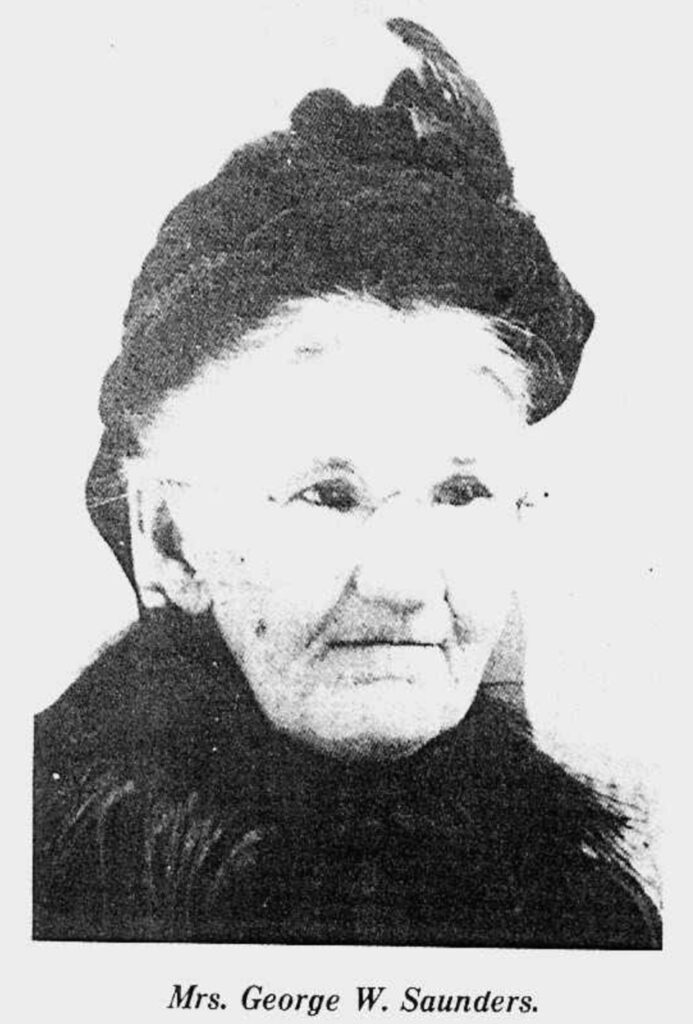
James’ wife Sarah in later years.
Note:
(James Gardner Bailey is my 3rd great uncle)
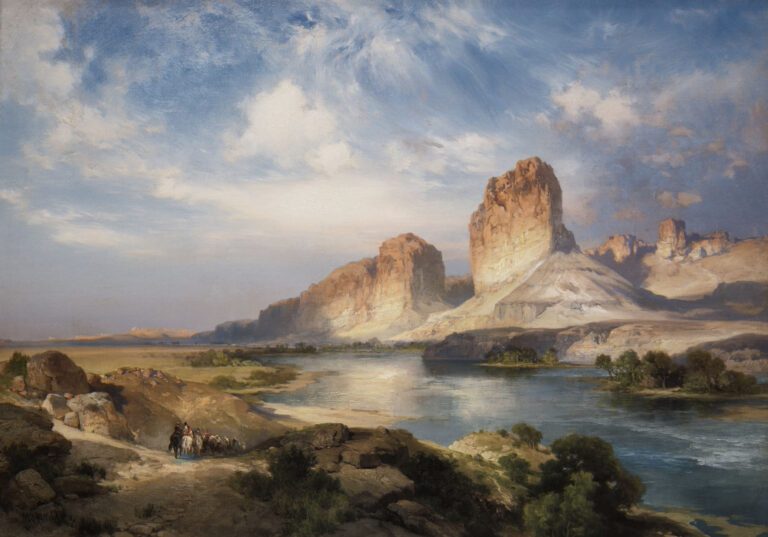
Picture: Green River, Wyoming by Thomas Moran, 1907, oil on canvas, 20 x 28 1/2 in. (50.8 x 72.4 cm), Tacoma Art Museum
If you enjoyed this story, you might also like the story of Christian Fausel, an immigrant who fought for his life in the Civil War.
Learn more:
Utah War supply train raids near Green River in 1857, led by Lot Smith and the Nauvoo Legion — earlier conflicts that shaped the region’s turbulent history: The Utah War in Wyoming
The Story of Green River: History of a Desert Oasis: An in-depth look at the river’s role from ancient times through pioneer travel
Crossing the Green River Station: A historical overview of the ferry and emigrant station along key pioneer trails