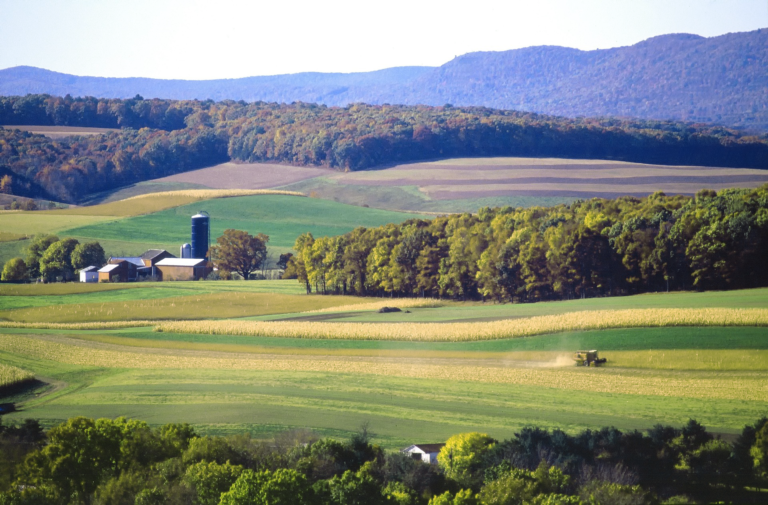

In the quiet fields of Colerain Township, Lancaster County, there’s a long trench running through the earth. Time has softened its edges. Grass has grown over its sides. Most people pass by without noticing, but that trench has a story. It was dug by hand nearly 300 years ago. Gabriel Morison carved it into the land as a boundary, maybe to keep cattle in, or to mark his property. Whatever the reason, it still runs through the field today, a lasting mark of one man’s determination on the Pennsylvania frontier.
From Northern Ireland to the Pennsylvania Frontier
Gabriel was born in 1715 in Londonderry, Northern Ireland. His childhood is mostly lost to history, but we know the world he grew up in. Northern Ireland was a tense place in the early 1700s. Religious and political conflict between Protestants and Catholics was common, and land was never guaranteed. Gabriel came from Scottish roots, descended from families who had likely moved to Ulster during the Plantation era.
His ancestors were part of the Scottish Covenanter movement, a group of Presbyterians who had pledged to keep their faith free from control by the monarchy. As a result of this resistance, many Covenanters faced imprisonment, exile, or even death for refusing to compromise their beliefs. For Gabriel’s family, religion was more than a tradition. It was a way of life. A core value passed down through generations. They lived as Presbyterians and grew strong through hardship. Through each challenge, they learned to hold fast to their faith, no matter the cost.
Like many younger sons of the time, Gabriel had few options at home. Under the law of primogeniture, the eldest son inherited the family estate. As a result, Gabriel and his brothers were left to make their own way. Some stayed. Others, like Gabriel, looked across the ocean and saw something more.
A New Life in Pennsylvania
Sometime before the 1740s, Gabriel crossed the Atlantic and settled in Lancaster County, Pennsylvania. It was a hard land, but a promising one. Pennsylvania had become a destination for immigrants from Ireland, Scotland, and Germany. Many were Presbyterian or Lutheran. They came for land and freedom, but also for the chance to build something of their own.
Gabriel purchased over 300 acres and set to work turning forest into farmland. He married Martha Glenn Wilson, linking himself to one of the other early families in the area. Together, they raised children who would grow up to become farmers, patriots, and preachers. The family’s roots ran deep in Lancaster County.
Ulster Scot Settlers in Pennsylvania
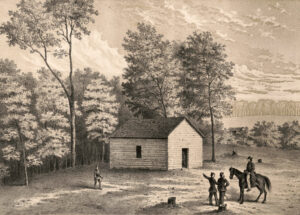
Life on the Pennsylvania frontier was far from easy. The land had once belonged to the Susquehannock, a Native people who were nearly wiped out by disease and war. European settlers moved in quickly during the early 1700s. Gabriel and others cleared trees, built log cabins, and planted crops. They raised wheat and livestock, and bartered goods with their neighbors.
The Scotch-Irish in Pennsylvania were known for spreading out across the countryside rather than forming tight villages. Their farms were often self-sufficient. A family might trade a barrel of grain for a set of shoes or offer a side of pork in exchange for a neighbor’s help during harvest. There was no wasted effort. Everyone worked.
Church and community were at the center of it all. In particular, Gabriel’s faith likely helped him through the lean years. He wasn’t just building a farm. He was laying the foundation for generations to come.
The Morison Farm and Land Records
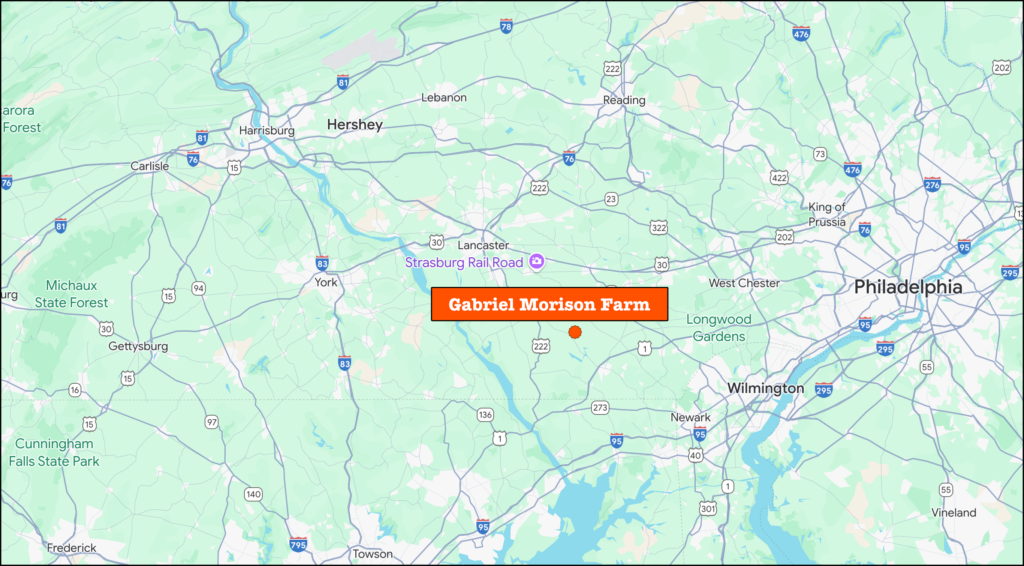
Gabriel’s name appears in Pennsylvania’s early land records. On April 7, 1767, he applied for a 6-acre tract in Colerain Township, adjoining the property of Jeremiah McFadin. Just a month later, on May 5, he submitted another application for 16 more acres. These filings were part of the East Side Applications system, documented in the Pennsylvania land records, to claim land before it was officially granted.
This method of land distribution helped men like Gabriel secure their place in a growing colony. They cleared land, built fences and homes, and eventually patented their property. These small, handwritten records are some of the only surviving details of their daily lives. But they tell us a lot. Gabriel wasn’t drifting. He was expanding. Building. Planning for the future.
War and Civic Life
During the French and Indian War, Lancaster County sat on the edge of danger. Settlers from farther west fled toward places like Colerain, bringing stories of raids and destruction. Gabriel would have seen the fear in their faces and heard the urgency in their voices. The war disrupted trade and brought new taxes. For farmers, it was a time of worry and uncertainty.
Still, Gabriel remained active in his community. In 1759, court officials selected him to serve on a jury in a criminal case. That wasn’t a small thing. Jury duty was reserved for landowners and men of integrity. It showed that Gabriel was respected, someone whose judgment could be trusted.
During the Revolutionary War, Gabriel was in his sixties. He likely didn’t serve on the battlefield, but his family did their part. His son, Alexander, worked as a teamster for the Continental Army. He helped transport goods and supplies, a vital role in keeping soldiers fed and equipped.
A Life Remembered
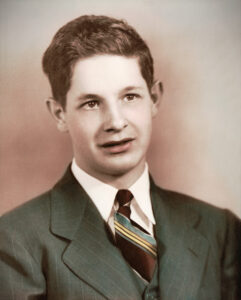
Gabriel died in 1799 in Colerain Township. He left behind land, children, and a legacy built through faith and labor. Over the generations, his descendants became farmers, preachers, doctors, and soldiers. They moved west and south, carrying his values with them. One of those descendants, Clarence Morrison, continued the family’s agricultural legacy in the 20th century, embracing modern farming techniques while staying rooted in the same land-minded values Gabriel passed down.
His story is one of many that shaped early America. He didn’t make headlines, but he helped build a nation. People like Gabriel cleared the land, fed the people, and kept their communities running. His trench still winds through the earth, nearly hidden by time. But if you know where to look, it’s there.
And that’s how you remember a man like Gabriel Morison.
Notes
I have chosen to use the older spelling of “Morison” because that is how Gabriel’s name appears in the earliest records. Later in life, the spelling changed to “Morrison.”
Across the Sea: Listen to a song that captures the epic journey of Gabriel Morison and his family, from Scotland to Ireland, and finally to Pennsylvania. It blends history, resilience, and tradition into a sweeping folk rock anthem, telling their story through rich imagery and a steady, rhythmic build. (created using Suno AI)